[이데일리 마켓in 박소영 기자] TOKUSHIMA, Japan — “Woo to the Young to the Woo!” Tokushima Governor Masazumi Gotoda opened the interview with a line from the Korean hit drama Extraordinary Attorney Woo, drawing laughter as he welcomed visitors.
The remark was more than a lighthearted gesture. As the prefecture seeks to address structural challenges such as population decline and a weakening industrial base, it is placing startups at the centre of its growth strategy—while increasingly viewing South Korea as a key partner. Interest in Korean culture has followed naturally.
Gotoda, who has been actively promoting the attraction of global companies and young talent, emphasised throughout the interview his commitment to expanding cooperation with Korean businesses.
Tokushima is located in eastern Shikoku, one of Japan‘s four main islands, and lies close to the Kansai region, home to cities such as Osaka, Kyoto and Nara. The prefecture is also home to globally recognised companies including Otsuka Pharmaceutical, known for Pocari Sweat, and Nichia, a pioneer in blue and white LED technology.
The local government has established programmes to support global startups, connecting them with large domestic corporations for open innovation and proof-of-concept projects, while also assisting with local settlement. Tokushima is simultaneously planning large-scale investment in the battery sector, with support measures in place for Korean companies entering the region.
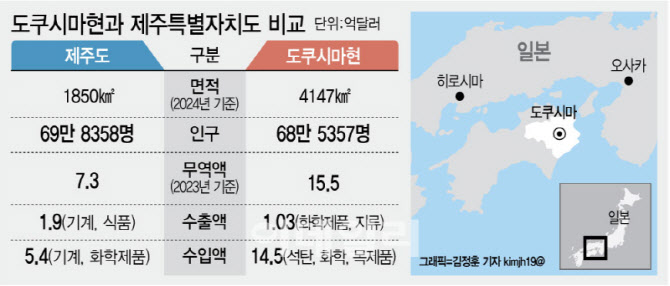
The prefecture has maintained close ties with South Korea, including a sister-city agreement with Jeju Province. Since late 2024, Korea has been its only international flight route, underscoring efforts to attract both Korean businesses and tourists. Plans are underway to expand services into daily flights.
“Tokushima offers a chance to experience a side of Japan that is less known,” Gotoda said. “It is also an ideal location for ’workation‘—combining work and leisure.”
Inside the governor’s office, promotional materials highlighting remote work in a natural environment line the walls, while local specialties—from citrus fruits and sweet potatoes to indigo-dyed goods—are displayed on the table.
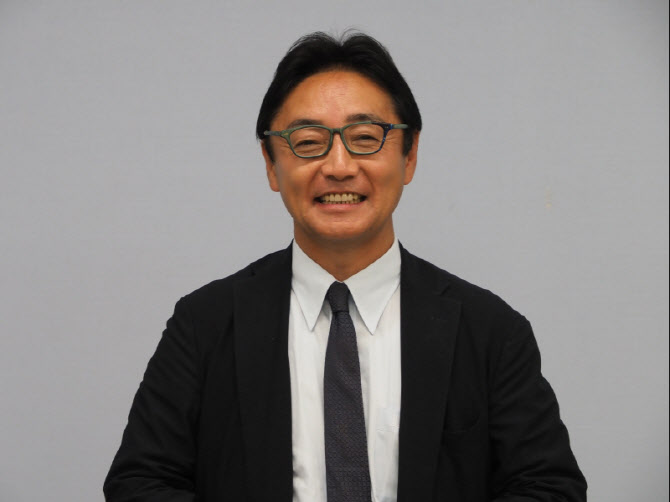 | | Tokushima Governor Masazumi Gotoda. (Photo=Tokushima) |
|
Building a Regional Unicorn: A Strategy to Develop Talent and Companies TogetherJapan is now more than three years into its five-year startup development plan announced in November 2022. Unlike in many countries, regional governments play a leading role alongside the central government.
Tokushima is among the most active prefectures in fostering new industries and global startups. It ranks ninth nationwide in per capita GDP and has one of the highest household savings rates, providing a strong financial base for regional investment.
“Our goal is to produce the next Otsuka or Nichia,” Gotoda said.
He pointed to Sansan, an IT company headquartered in Tokyo, as a representative example. After opening a satellite office in Kamiyama in 2010, the company went on to list on the Tokyo Stock Exchange in 2019 with a market capitalisation of around ¥100bn. Sansan has since established a technical college in the town, attracting and training talent from across Japan.
“Just as talent in Korea tends to concentrate in Seoul, Japan faced a similar pattern,” Gotoda said. “But as more regionally based companies emerge, we are beginning to see talent flow back into local areas.”
As Japan‘s startup policy enters its later phase, the focus is shifting toward enhancing global competitiveness. Tokushima has launched programmes such as “Tobitate,” which selects around 30 young people annually to study abroad and return with global experience to start businesses.
The prefecture has also created the “Tokunowa” platform, designed to support companies through to initial public offering. The programme brings together industry, academia and government, with partners including SoftBank, Google and Tokushima University, to provide resources such as office space and talent.
“Innovation comes from ’zero to one‘,” Gotoda said. “We often talk about ’serendipity‘—discovering unexpected talent is at the core of what we do.”
Efforts are also underway to bring back successful entrepreneurs originally from Tokushima to mentor the next generation. Among those supporting such initiatives is Toshiaki Higashihara, chairman of Hitachi, who is part of a Tokyo-based association of Tokushima natives.
 | | [이데일리 김정훈 기자] |
|
¥10bn Battery Investment and Call for Korea-Japan Economic CooperationGotoda, an eight-term former member of Japan’s lower house, took office as governor in May 2023 after holding several senior government roles.
“During my time in national politics, I built relationships that deepened my understanding of Korea-Japan cooperation,” he said, adding that the 60th anniversary of diplomatic ties last year made efforts to strengthen exchanges even more meaningful.
He said the prefecture is preparing a range of support measures to attract Korean companies, including subsidies and potential investment. “We have secured close to ¥10bn to develop the battery industry,” he said.
Tokushima‘s focus on batteries is rooted in its existing industrial base. The region was once home to Sanyo’s battery operations, and today hosts facilities such as Panasonic Energy, which produces stationary batteries used in AI infrastructure, as well as Prime Planet Energy & Solutions (PPES), a joint venture between Toyota and Panasonic that manufactures batteries for electric vehicles.
Gotoda also referenced calls from business leaders, including SK Group Chairman Chey Tae-won, for stronger Korea-Japan economic cooperation. He stressed that closer collaboration is needed to compete with China‘s battery industry.
“We aim to strengthen the battery supply chain by bringing Korean companies into the ecosystem alongside major Japanese players in Tokushima,” he said. “We hope to see cooperation similar to the semiconductor cluster forming in Kumamoto, where TSMC has established operations.”