[이데일리 마켓in 박소영 기자] TOKUSHIMA, Japan — A renovated 70-year-old farmhouse in Kamiyama, a rural town in Tokushima Prefecture, now serves as a satellite office linked in real time to headquarters in Tokyo‘s Shibuya district. The space, once a cowshed, has been repurposed into a break area with hammocks, reflecting a broader shift in how Japanese companies approach work and location.
The office belongs to IT company Sansan Inc., one of the earliest firms to establish a satellite base in the town. Attracted by the rural setting, employees relocated from urban centres, while the company maintained close coordination with its Tokyo headquarters. The model helped drive Sansan’s 2019 initial public offering on the Tokyo Stock Exchange, where it debuted with a market capitalisation of roughly ¥100bn.
Sansan‘s success drew other technology companies to Kamiyama, accelerating an influx of young, high-income professionals. The town has since evolved into a de facto rural tech hub, with new restaurants, cafes, guesthouses and schools emerging alongside the growing workforce.
Central to this transformation is Green Valley, a local non-profit that acquires vacant properties, renovates them and converts them into shared workspaces. These facilities are offered to companies, artists and entrepreneurs, lowering barriers to relocation and business formation.
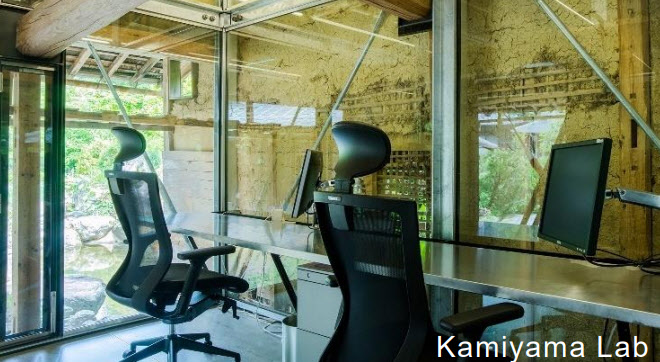 | | Sansans satellite office in Kamiyama, Tokushima [Photo = Sansan] |
|
Local residents have also played a key role. Backed by subsidies from Tokushima Prefecture, communities have taken part in shaping development plans, working alongside organisations such as Green Valley to identify local needs and propose policy initiatives. Similar models—combining satellite offices, regional funds and public-private collaboration—are increasingly being replicated across Japan.
The shift forms part of a broader policy push that began in 2014 under Japan’s regional revitalisation strategy, aimed at decentralising population and industry away from major cities.
A distinctive feature of the approach is the use of dormant bank deposits—funds left untouched for extended periods—to support social and economic projects. Since 2019, the government has designated the Japan Network for Public Interest Activities (JANPIA) to oversee allocation and management. As of February, the programme has deployed approximately ¥41.9bn across 1,572 initiatives under 269 projects.
“The system operates through a three-tier structure involving JANPIA, intermediary organisations and implementing entities,” said Tomoko Kawaguchi, a manager at JANPIA. “It allows private-sector expertise to address areas that are difficult for the government to tackle directly, while providing both financial and non-financial support.”
Market participants say Japan‘s regional startup ecosystem is entering a phase of acceleration, with policymakers increasingly emphasising venture investment alongside traditional revitalisation measures. Emerging sectors such as quantum computing and nuclear fusion are drawing attention as potential areas of global competitiveness.
By contrast, South Korea remains heavily concentrated in the capital region, with venture investment still largely centred around Seoul. The government has announced plans to build a “venture powerhouse” and recently introduced a ₩230bn regional growth fund, its largest to date. However, industry officials note that non-capital regions still account for only about 20 per cent of total venture investment.
Analysts say that increasing liquidity alone may not be sufficient to rebalance the ecosystem. Japan’s experience suggests that empowering private actors and local communities—rather than relying solely on government-led funding—will be critical to building sustainable regional innovation clusters.